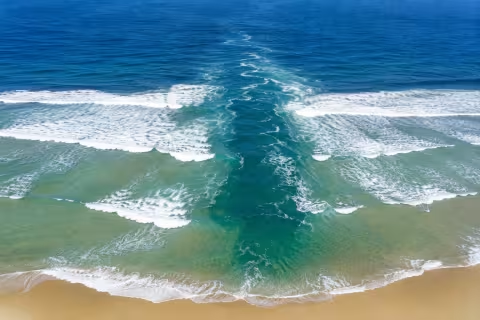
 Every year, rip currents catch thousands of swimmers by surprise. They're responsible for countless beach rescues around the world and, unfortunately, many drownings. Yet despite how common they are, rip currents remain one of the most misunderstood hazards in the ocean.
One of the biggest misconceptions is hidden in the name itself. Many people believe that a rip current will pull them beneath the surface of the water. In reality, that's almost never what happens.
Understanding what rip currents are, how they form, and what to do if you're caught in one could one day save your life—or someone else's.
What Is a Rip Current?
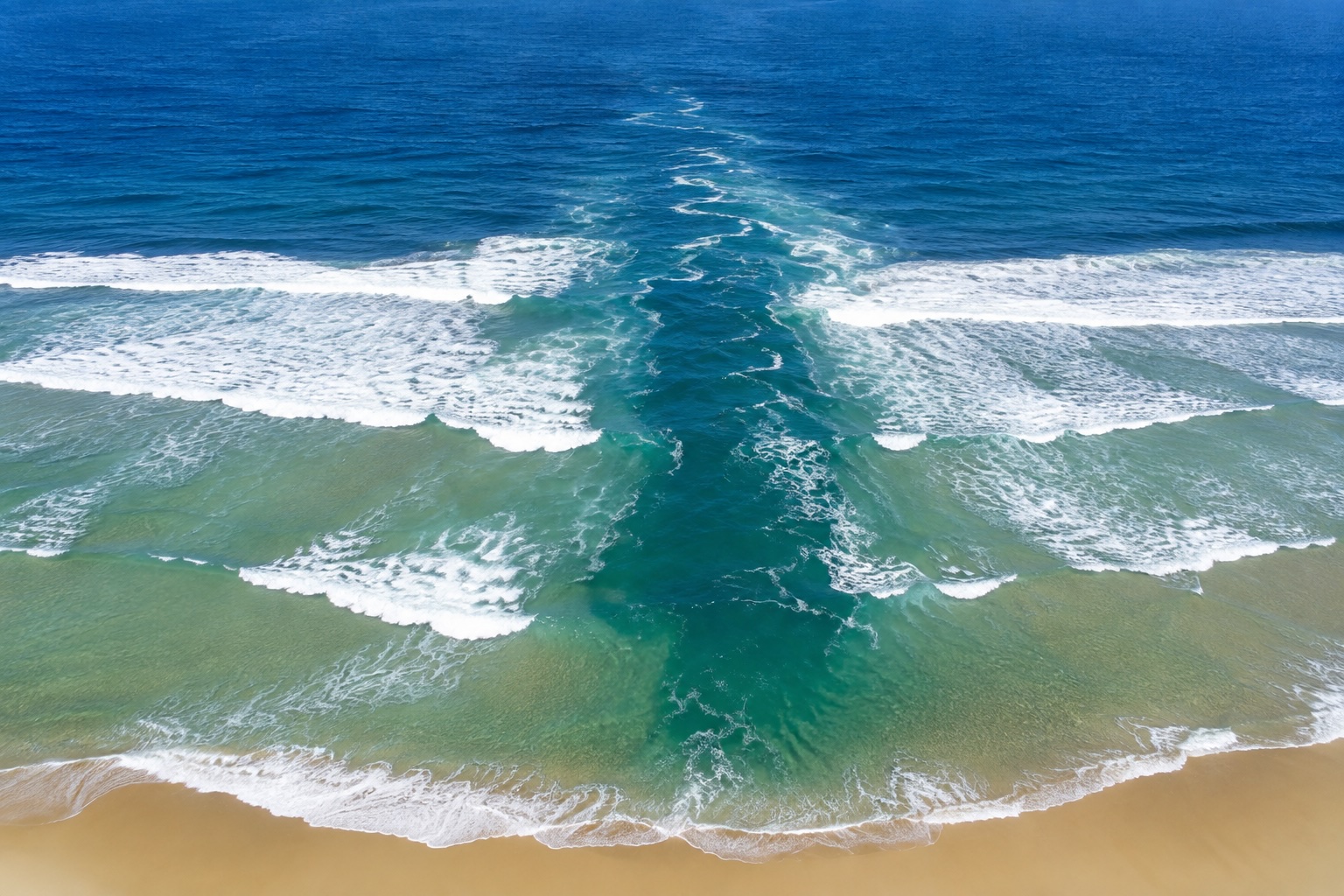
A rip current is a powerful, narrow channel of fast-moving water that flows away from the shoreline and back out to sea.
As waves continually push water towards the beach, that water has to find a way back offshore. Rather than flowing evenly back into the ocean, it often concentrates into narrow "rivers" of water that rush seaward through gaps in sandbars or between underwater features.
These currents can move surprisingly quickly. While many travel at around 0.5 metres per second, strong rip currents can reach speeds exceeding 2 metres per second—faster than an Olympic swimmer can sustain.
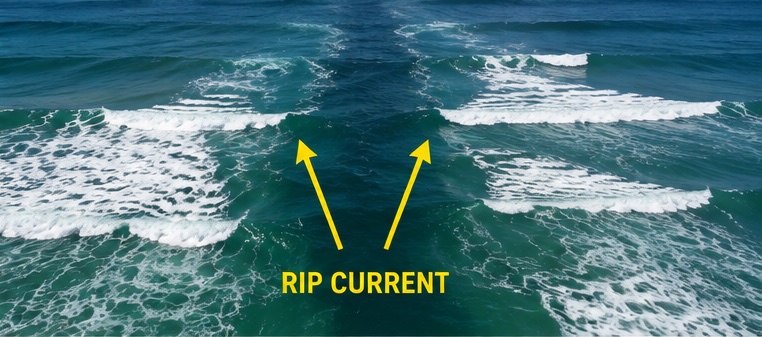
The important thing to remember is that a rip current moves away from the beach, not downwards.
Do Rip Currents Pull You Under?
 The simple answer is no.
Despite the dramatic name, rip currents do not normally pull people beneath the surface.
Instead, they carry swimmers away from shore. The danger comes from the speed of the current and the panic it often causes.
Many people instinctively try to swim directly back towards the beach. Unfortunately, this means swimming directly against the strongest part of the current. Even strong swimmers quickly become exhausted, increasing the risk of drowning through fatigue.
The current itself isn't what causes most fatalities—panic and exhaustion are.
How Do Rip Currents Form?
Rip currents are a completely natural part of many beaches.
They commonly develop when:
- Waves break unevenly along the shoreline.
- Water becomes trapped between sandbars.
- The returning water finds a narrow gap where it can escape.
- The concentrated flow creates a fast-moving channel heading offshore.
Rip currents can also form around:
- Piers and jetties
- Rock formations
- Headlands
- Reefs
- Breakwaters
Because beaches constantly change with tides, storms and wave action, the location of rip currents can change from day to day—or even throughout the same day.
How Can You Spot a Rip Current?
Rip currents aren't always obvious, but there are several clues that experienced beachgoers and lifeguards look for.
Watch for:
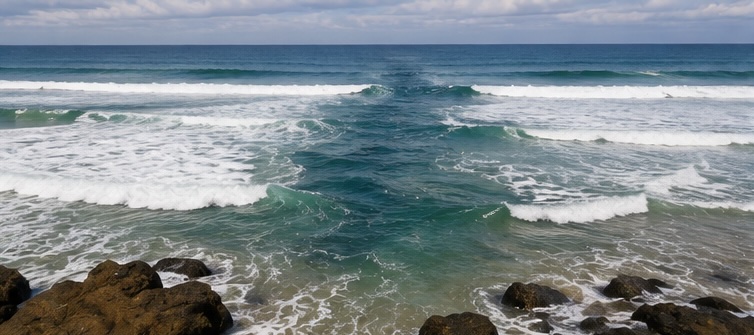
- A darker channel of water extending away from the beach.
- Fewer breaking waves in one section compared to surrounding areas.
- Choppy or rough-looking water between lines of breaking waves.
- Water carrying foam, seaweed or sand steadily away from shore.
- A noticeable gap in the surf where the waves appear smaller.
It's important to remember that not every rip current is visible. Some can be extremely difficult to identify, particularly on calm-looking beaches.
Whenever possible, swim at beaches patrolled by lifeguards and stay between the designated swimming flags.
What Should You Do If You're Caught in a Rip Current?
 The most important thing you can do is remain calm.
A rip current does not continue forever. Most are relatively narrow, often only a few metres to several tens of metres wide.
If you find yourself being carried away from shore:
1. Stay Calm
Avoid panicking. Panic wastes energy and makes it much harder to think clearly.
2. Don't Swim Straight Back to Shore
Trying to swim directly against the current is usually the biggest mistake people make.
Even strong swimmers can become exhausted long before reaching the beach.
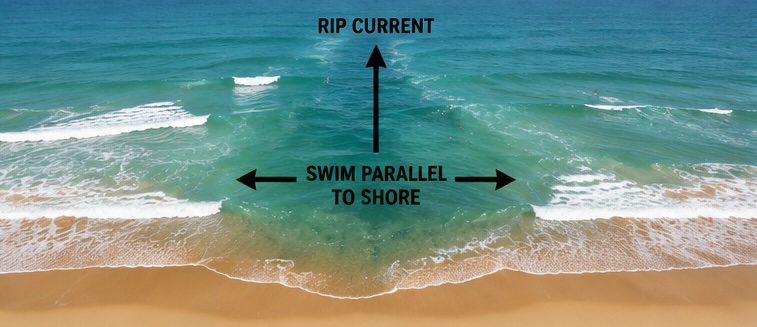
3. Swim Parallel to the Shoreline
Instead of fighting the current, swim parallel to the beach.
Since rip currents are generally narrow, swimming sideways usually allows you to leave the strongest flow relatively quickly.
Once you're out of the current, you can then swim diagonally back towards shore using the incoming waves to help you.
4. Float If You Need To
If you're too tired to swim, float on your back and conserve energy.
Most rip currents weaken further offshore, and floating gives you time to recover while signalling for assistance.
5. Call for Help
Raise one arm and wave if you need assistance.
Lifeguards are trained to recognise this signal and can respond quickly.
What If Someone Else Is Caught?
One of the biggest mistakes bystanders make is attempting a rescue themselves.
Many would-be rescuers become victims after entering dangerous surf without proper training or equipment.
Instead:
- Alert the lifeguards immediately.
- Call emergency services if no lifeguards are present.
- Throw something that floats if possible, such as a rescue tube, life ring, cooler, or even an empty container.
- Encourage the person to remain calm and float until help arrives.
Remember the lifesaving principle:
Reach or throw—don't go, unless you have the training and equipment to perform a safe water rescue.
Rip Currents and Divers
 Although rip currents are most commonly associated with swimmers, scuba divers and snorkellers should also understand how they work.
Divers entering or exiting from shore can encounter strong currents near the surf zone, particularly around gaps in reefs or sandbars.
Good dive planning includes:
- Checking local conditions before entering the water.
- Listening carefully to local dive briefings.
- Entering and exiting at recommended locations.
- Maintaining good buddy communication.
- Carrying an SMB (Surface Marker Buoy) where appropriate.
Understanding local water movement helps divers stay safe and avoid unnecessary stress during shore dives.
Prevention Is Always Better Than Escape
The safest approach is to avoid rip currents altogether.
Before entering the water:
- Choose beaches with lifeguards whenever possible.
- Swim between the designated flags.
- Observe the surf for several minutes before entering.
- Ask lifeguards about local conditions.
- Never overestimate your swimming ability.
- Keep children within arm's reach near the water.
A few moments of observation can prevent a dangerous situation later.
Final Thoughts
Rip currents are one of the ocean's most powerful natural hazards, but they're also one of the easiest to survive when you know what to do.
The key is understanding that they don't pull you underwater—they carry you away from shore. Fighting the current is rarely the answer. Remaining calm, swimming parallel to the beach, and conserving your energy can make all the difference.
Whether you're swimming, snorkelling, surfing or diving, respecting the ocean and understanding how it behaves is one of the most valuable safety skills you can develop.
The ocean is an incredible place to explore—but knowledge is one of the best pieces of safety equipment you can take with you.